Business & asset finance
Loss carry-back is back: what it means for a company buying equipment in 2026–27
Companies under $1 billion turnover can again carry a loss back against tax paid in the previous two years. It changes the cash picture of a bad year, not how lenders read your financials. An outline, an example and the finance traps.
26 October 2026
6 min read
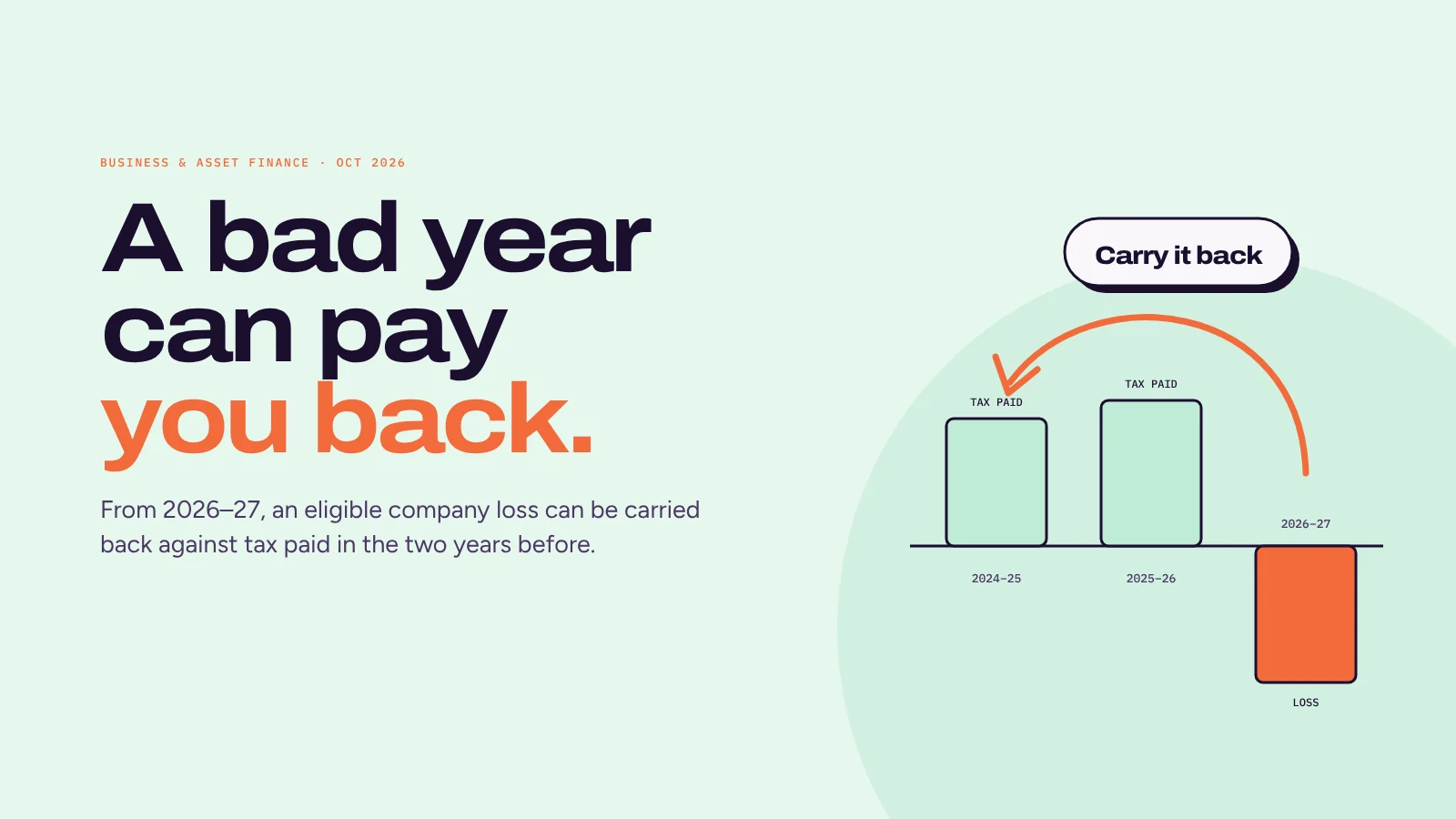
From tax years starting on or after 1 July 2026, companies with turnover under $1 billion can carry a tax loss back against tax paid in the previous two years and get a refund. That changes the cash picture of a bad year, including a year with a big equipment purchase. It doesn't change how lenders read a loss on your financials, so plan the finance and the tax together, with your accountant.
Loss carry-back is back. It first appeared as a COVID measure for the 2019–20 to 2022–23 years, lapsed, and was reintroduced in the May Federal Budget. The bill passed Parliament in August alongside the permanent $20,000 instant asset write-off.
I'm a finance broker, not an accountant, so the tax mechanics are an outline here and the detail is for your accountant. What I can tell you is how carry-back interacts with equipment finance and with how lenders assess a business, because that's where I see people get caught.
The measure in outline
- Who: companies with aggregated annual turnover under $1 billion. Sole traders, partnerships and trusts aren't covered.
- When: losses made in tax years starting on or after 1 July 2026, so for most companies the first eligible year is 2026–27.
- How: a revenue loss can be carried back against company tax paid in up to the two previous years, producing a refundable tax offset. Capital losses don't count.
- Limit: the amount is capped by the company's franking account balance, and by the tax actually paid in those years.
A separate measure from 1 July 2028 will give start-ups with turnover under $10 million a refundable offset for losses in their first two years, capped by the PAYG withholding and fringe benefits tax paid on employees' wages.
Why this matters for equipment
A big purchase in a quiet year can turn a small profit into a loss. The $20,000 write-off, depreciation on larger assets and the interest on finance all count as deductions. Before carry-back, that loss sat on the books until the company made a profit again. With carry-back, an eligible company can turn it into a refund of tax it paid when times were better.
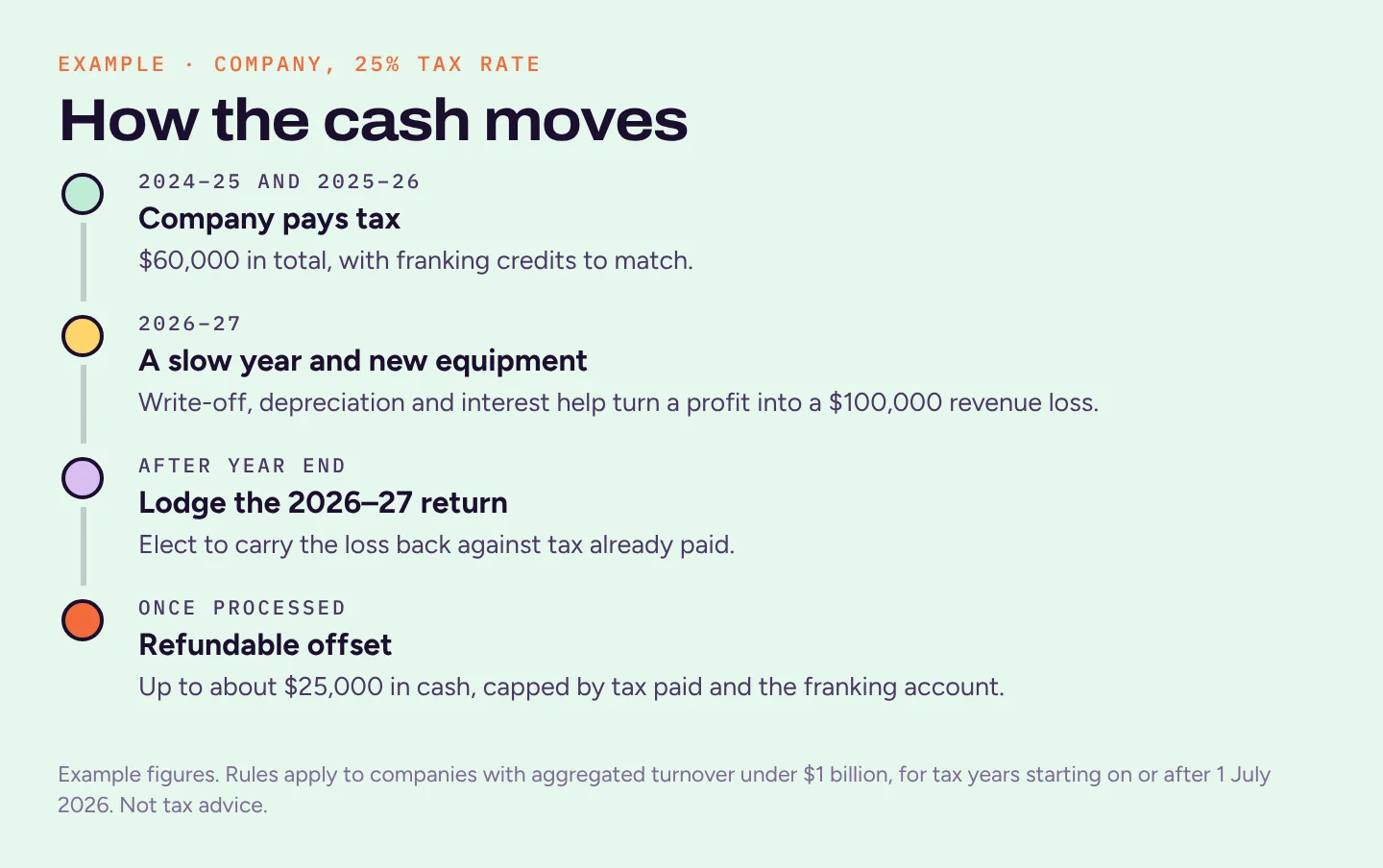
Let's say a company paid $60,000 of tax across 2024–25 and 2025–26, has a healthy franking balance, and then makes a $100,000 revenue loss in 2026–27 after a slow year and a round of equipment. These are example figures. At a 25% company tax rate, carrying that loss back could be worth up to about $25,000 in cash, once the 2026–27 return is lodged and processed.
Where the finance side catches people
Three things to plan for.
- The refund is later, the repayments are now. The cash arrives after you lodge the return, so it can't fund the deposit or the first year of repayments on new equipment. Finance the equipment on today's cash flow, not tomorrow's refund.
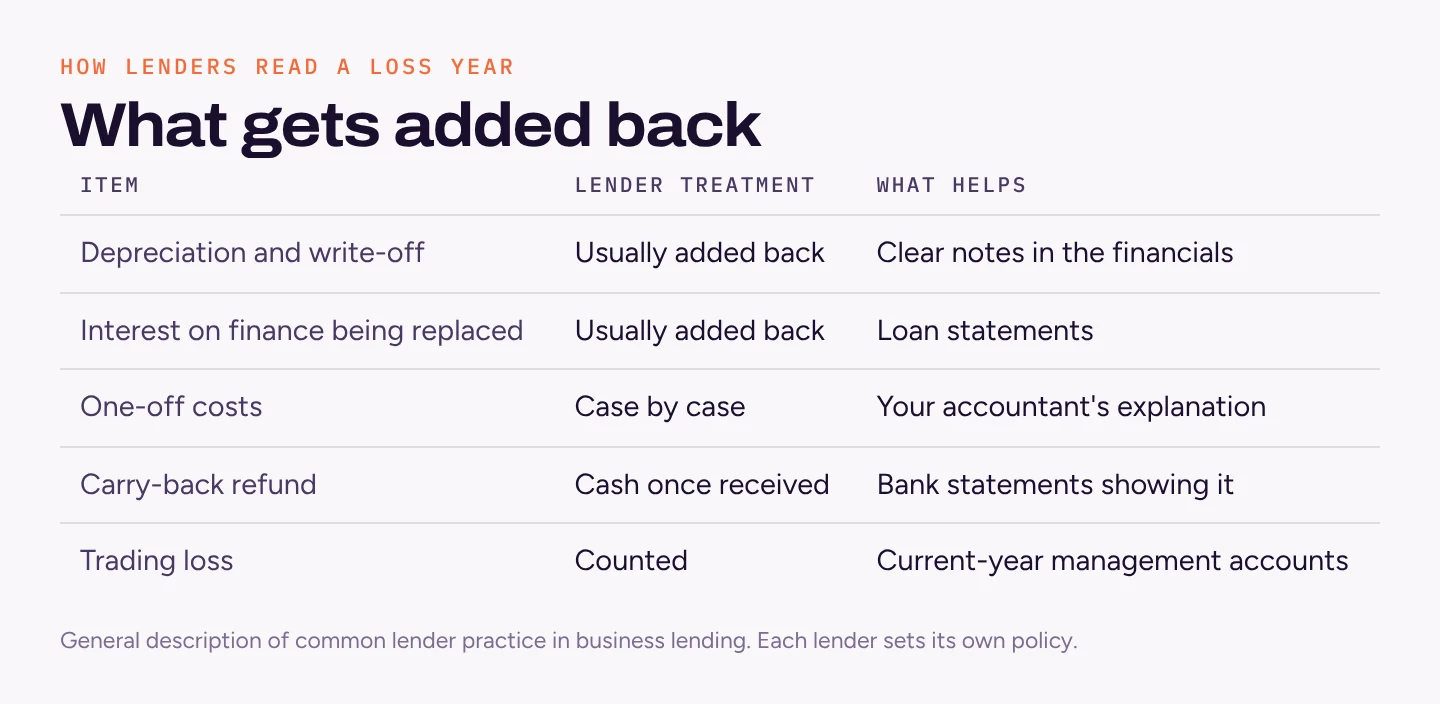
- Lenders read the loss, not the refund. A lender assessing your next loan will look at your last one or two years of financials. A loss year needs explaining, and the explanation is usually in the add-backs: depreciation, the write-off, interest on finance being replaced and genuine one-off costs. A good set of notes from your accountant makes this much easier.
- Timing a purchase for tax can cost you on finance. Bringing forward a purchase to deepen a loss year may help the refund and hurt your borrowing for the next two years. Work out which matters more before you sign.
Questions to take to your accountant
- Is the business a company, and is its turnover under the $1 billion threshold?
- How much tax did the company pay in the last two years, and what's in the franking account?
- Would bringing a purchase forward create or deepen a loss, and is that worth more than the effect on the next loan application?
- How would the carry-back interact with dividends you were planning to pay from the franking account?
How it fits with the other 2026 changes
The $20,000 instant asset write-off is now permanent for businesses under $10 million turnover, which I covered in the write-off is permanent. The structure of the finance itself, term, balloon and deposit, matters more than the rate, as set out in financing equipment when rates are rising. Carry-back is the third piece: it changes what a loss year costs you in cash, if you trade through a company.
Questions people ask
Can a sole trader use loss carry-back?
No. It's available to companies only. Sole traders and partners have their own loss rules, which your accountant can explain.
When can a company first claim it?
For losses in tax years starting on or after 1 July 2026, claimed when that year's return is lodged.
Does a carry-back refund help me get equipment finance?
Not directly. Lenders assess your financials and cash flow. A refund received can improve cash on hand for a later application, but it doesn't erase the loss on the statements.
Where to start
Our asset and machinery finance page covers the structures we arrange, and the loan repayment calculator gives a monthly figure for any amount and term. If you're planning a purchase this financial year, book a free 30-minute chat, and bring your accountant into the conversation early.
Sources
- Treasurer: next tranche of tax reforms pass Parliament, 19 August 2026
- BDO: reforming the treatment of tax losses, Budget 2026
- Baker McKenzie: Budget bites, loss carry-back
- ATO: business losses
Last reviewed 26 October 2026. This is general information only and isn't tax advice. Speak to your accountant about your own situation. It doesn't take your objectives, financial situation or needs into account. All figures are examples.
Want this applied to your numbers?
Articles are general information. A 30-minute chat with Suvidh and the team turns it into a plan for your situation: borrowing power, structure and the lender that fits.
Book a free chatRun the calculatorsWritten by the Cinch Loans team · Reviewed by Suvidh Arora, Chief solutions officer · About us
Keep reading
More from Cinch Insights.
Plain-English articles on home loans, refinancing, rates and the property market, written for Australian borrowers rather than for lenders.
Business & asset finance
October 26, 2026
Loss carry-back from 1 July 2026: how it fits with equipment finance | Cinch Loans
Companies under $1 billion turnover can again carry a loss back against tax paid in the previous two years. It changes the cash picture of a bad year, not how lenders read your financials. An outline, an example and the finance traps.