Refinancing
Coming off interest-only: the repayment cliff and your five options
When interest-only ends, the repayment jumps by a fifth or more on the same debt. Rolling over needs no application; every other option needs a fresh assessment at the rate plus 3 points. Start six months out.
26 October 2026
6 min read
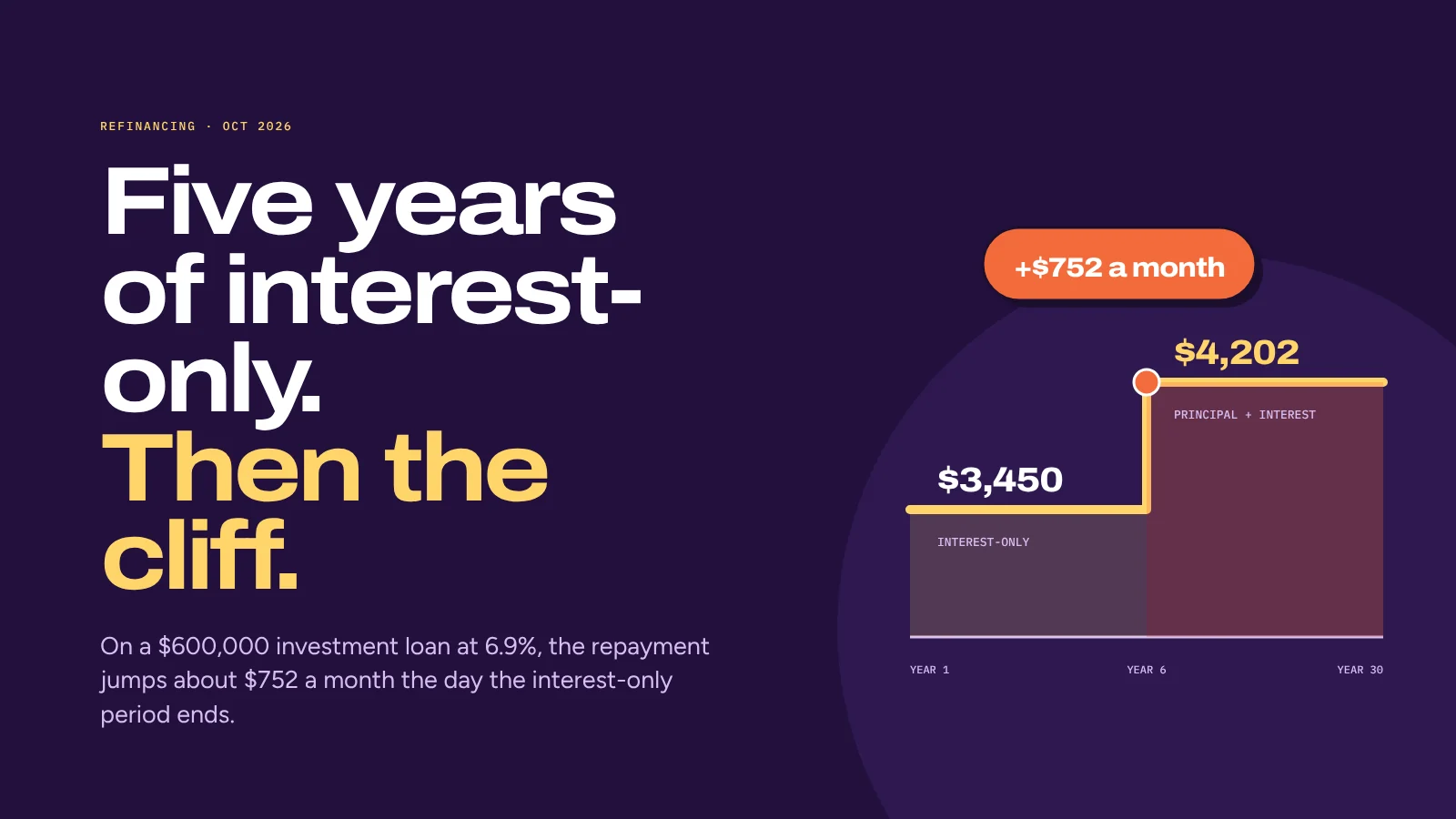
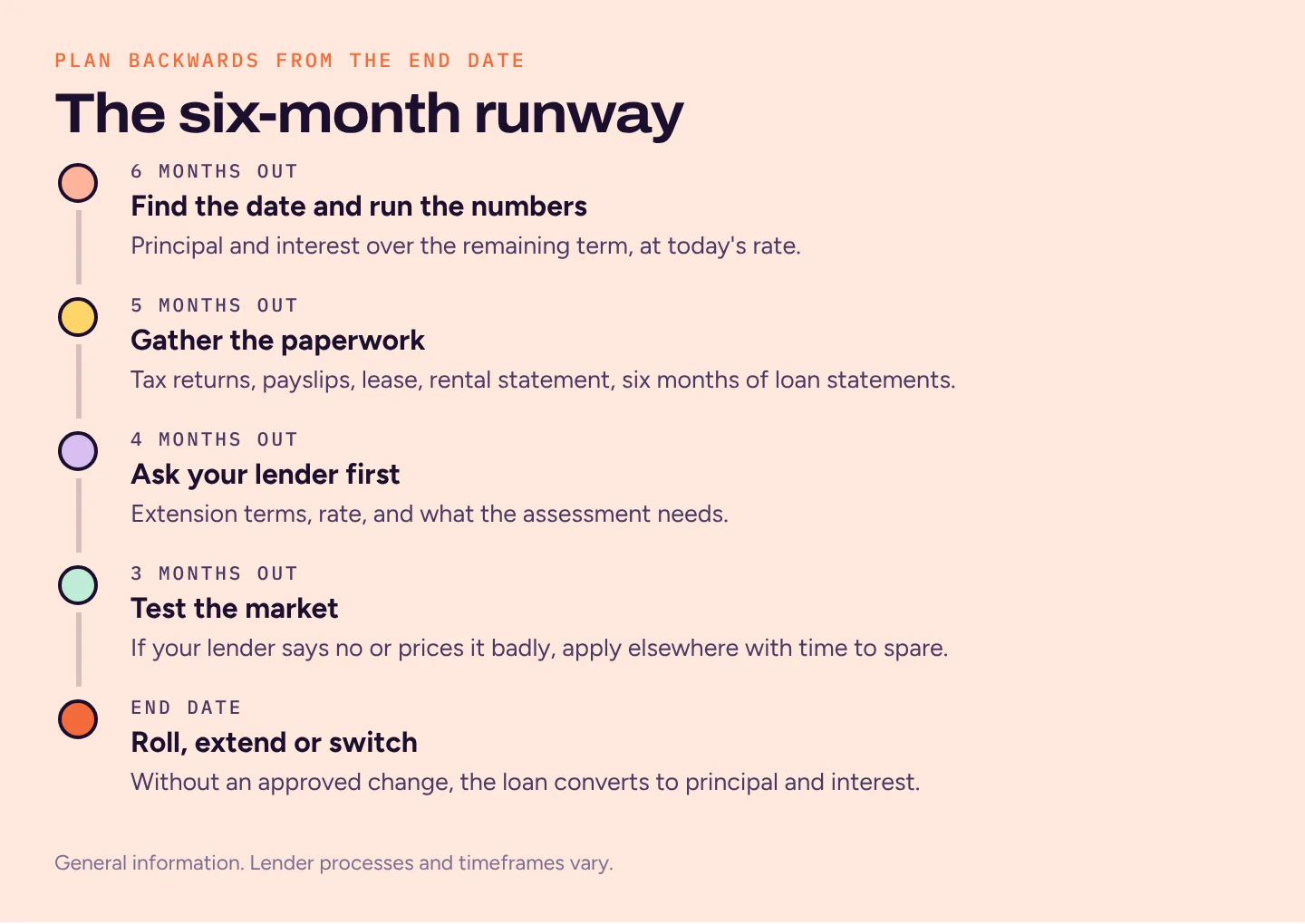
When an interest-only period ends, the loan switches to principal and interest over whatever term is left, and the repayment jumps, often by a fifth or more. You can let it roll over, ask your lender to extend interest-only, refinance, or restructure. Each option except rolling over needs you to pass a fresh assessment, so start six months before the date, not six weeks.
Interest-only lending has come back. APRA's figures put it at more than a fifth of new home lending in the June quarter, up from around 18% in mid-2020. Most of those loans carry an interest-only period of up to five years, and every one of them has a date when it ends.
For investors who set up interest-only when rates were lower, that date now arrives with two increases at once: the rate is higher, and the repayment starts including principal. Here's what the jump looks like, and the options in the order I'd look at them.
What the jump looks like
Let's say you have a $600,000 investment loan on a 30-year term, with the first five years interest-only, at 6.9%. These are example figures.
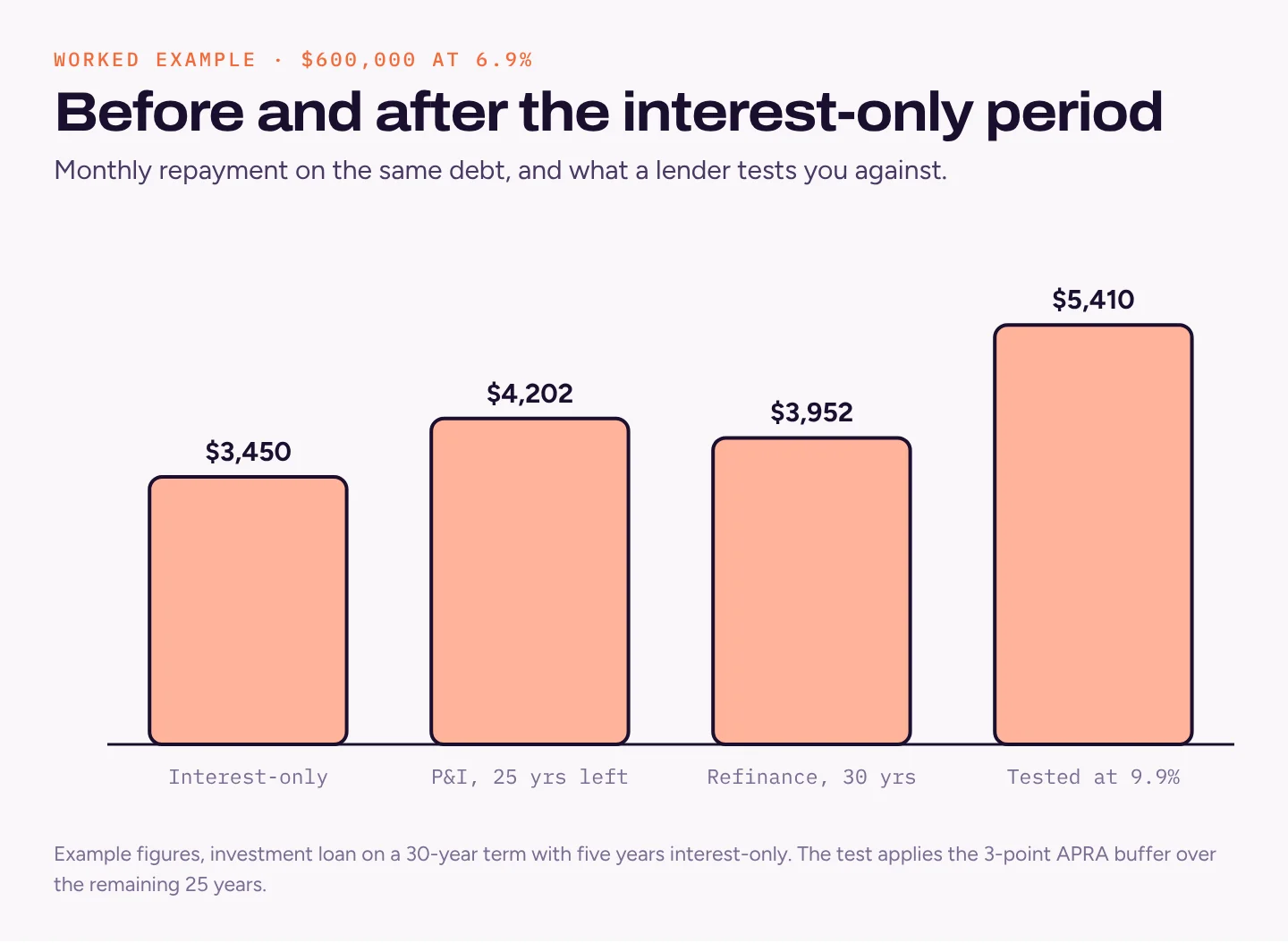
While it's interest-only, the repayment is about $3,450 a month. When the five years end, the loan switches to principal and interest over the 25 years that are left, and the repayment becomes about $4,202. That's $752 a month more, or about 22%, on the same debt at the same rate. If the rate had also risen since the loan started, the jump is bigger again.
Refinancing to a fresh 30-year principal-and-interest loan would bring it down to about $3,952, but that stretches the debt and needs a full assessment.
Why the assessment is the hard part
Any option other than rolling over means a lender tests whether you can afford the loan. That test is at the loan rate plus 3 percentage points, on principal and interest over the remaining term, not the 30 years you started with. On our example, that's a test repayment of about $5,410 a month.
So an investor whose rent, salary and other debts covered the interest-only payment comfortably can find they no longer pass on paper. It's the same trap I described in mortgage prison, 2026 edition, with a shorter term making it tighter.
Your options, in order
- Roll to principal and interest. No application, no assessment. The repayment goes up, the debt starts going down. If the budget can carry it, this is the simplest outcome and often the right one.
- Extend interest-only with your current lender. Many lenders will consider it, usually for up to five more years, but it's a new credit assessment and some apply a higher rate to interest-only loans. Ask what they need and how long it takes.
- Refinance to another lender. Gets you a fresh term and possibly a sharper rate. It's a full application, a valuation, and the same 3-point buffer, so it suits investors with strong income or low debt against the property.
- Split the loan. Part principal and interest, part interest-only. It softens the jump and keeps some flexibility, if the lender will extend part of it.
- Sell or reduce the debt. If none of the above work, selling before the jump is better than selling after missing repayments. That's a conversation for well before the date.
What a lender will ask for
Whichever way you go, the paperwork is the same, and having it ready saves weeks:
- your last two tax returns and notices of assessment, or two years of company financials if you're self-employed;
- recent payslips;
- the current lease and a rental statement for the property;
- six months of statements for every loan and card, including the home loan;
- a rough idea of the property's value, from recent sales nearby.
The questions behind the decision
Interest-only isn't good or bad on its own. It suits an investor who's paying down a home loan with the money they'd otherwise put into principal, or who needs cash flow for a few years. It doesn't suit an investor who's using it because the property doesn't pay for itself.
The tax side has changed too. The May Budget limited negative gearing on established homes bought after Budget night (new builds are exempt), while those bought before keep the old rules. How that affects your property, and whether restructuring a loan changes anything, is a question for your accountant before you sign anything new. I covered the market effect in investors are leaving.
Questions people ask
Will my lender automatically extend interest-only?
No. When the period ends, the loan converts to principal and interest unless you've applied for an extension and been approved.
Can I refinance just to get a new interest-only period?
Yes, if you pass the new lender's assessment. It's the same full application as any refinance, and the test uses the remaining term.
How early should I start?
Six months before the end date. That leaves time to try your current lender first, then another, without running out of road.
Where to start
Check your loan statement or app for the date the interest-only period ends, then run the loan repayment calculator on principal and interest over the remaining term. Our refinancing page covers how we review a loan, and the retention-call approach in stay or switch applies here too. If your date is inside the next year, book a free 30-minute chat.
Sources
- APRA: quarterly ADI property exposures, June 2026
- APRA: serviceability buffer held at 3 points, May 2026
- Moneysmart: interest-only home loans
Last reviewed 26 October 2026. This is general information only and isn't tax advice. It doesn't take your objectives, financial situation or needs into account. All repayment figures are examples.
Want this applied to your numbers?
Articles are general information. A 30-minute chat with Suvidh and the team turns it into a plan for your situation: borrowing power, structure and the lender that fits.
Book a free chatRun the calculatorsWritten by the Cinch Loans team · Reviewed by Suvidh Arora, Chief solutions officer · About us
Keep reading
More from Cinch Insights.
Plain-English articles on home loans, refinancing, rates and the property market, written for Australian borrowers rather than for lenders.
Refinancing
October 26, 2026
Interest-only period ending in 2026? Repayment jump, extension and refinance options | Cinch Loans
When interest-only ends, the repayment jumps by a fifth or more on the same debt. Rolling over needs no application; every other option needs a fresh assessment at the rate plus 3 points. Start six months out.